Table of Contents
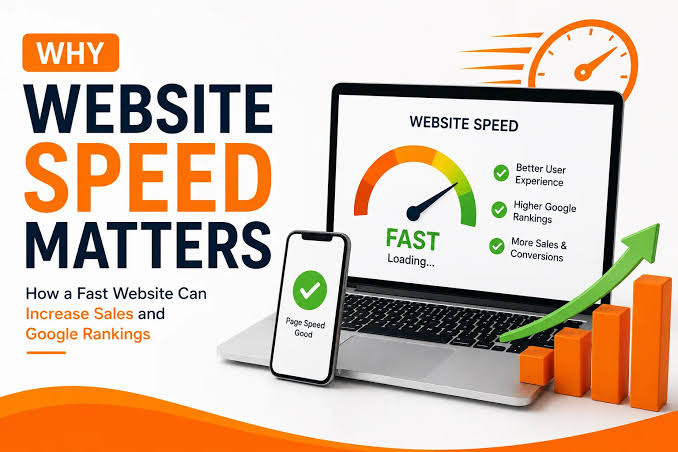
A website that takes five seconds to load might not seem like a serious problem until you consider what happens on the other end. A visitor lands on a slow page, waits, gets frustrated, and leaves before ever seeing the product or service being offered. That lost visitor never becomes a customer, and Google notices the pattern too, which affects how the site ranks for everyone else searching for the same thing.
Speed Is a Ranking Factor, Not Just a Convenience
Google has made page speed an explicit part of how it ranks websites through what it calls Core Web Vitals, which measure loading speed, interactivity, and visual stability. A website that loads slowly is directly disadvantaged in search rankings compared to a faster competitor offering the same content, even if the slow site has otherwise good content and keywords.
Every Second Costs Real Visitors
Visitor patience for page loading has shrunk dramatically as mobile browsing became the norm. Research consistently shows that a large percentage of visitors abandon a page if it takes more than a few seconds to load, and this abandonment rate increases sharply with each additional second of delay. For an e-commerce or service business, this translates directly into lost sales, not just lost traffic.
Mobile Speed Matters Even More
Mobile devices often have slower processors and less reliable internet connections than desktop computers, which means a website that loads acceptably on desktop can be painfully slow on mobile. Since the majority of web traffic in India now comes from mobile devices, mobile speed optimization is not optional — it directly affects the experience of most visitors.
What Actually Slows a Website Down
Large, unoptimized images are the most common cause of slow websites, often loading files far bigger than needed for how they are displayed. Excessive plugins or scripts, particularly on platforms like WordPress, each add their own loading time. Poor quality hosting that cannot handle traffic efficiently, and unoptimized code with unnecessary bulk, all contribute to slow load times that compound on top of each other.
Image Optimization Is the Easiest Big Win
Compressing images without a noticeable quality loss, using modern image formats, and loading images only as a visitor scrolls to them rather than all at once, are some of the highest impact, lowest effort changes a business can make to improve speed.
Choosing Hosting That Can Handle Your Traffic
Cheap, shared hosting plans often struggle once a website receives meaningful traffic, causing slowdowns exactly when the business needs the site to perform well, such as during a promotion or sale. Choosing hosting appropriate for the actual traffic and needs of the business prevents this bottleneck.
Reducing Unnecessary Code and Scripts
Every plugin, tracking script, and third party embed on a website adds to loading time. Reviewing what is actually necessary and removing anything that provides little value relative to its performance cost keeps a website lean and fast.
Measuring and Monitoring Speed
Website speed should be checked regularly, not just once during development, since new content, plugins, or code changes over time can gradually slow a site down without anyone noticing until it becomes a real problem. Regular speed audits catch this before it affects rankings or sales significantly.
The Business Case for Speed
Improving website speed is one of the rare changes that improves search rankings, user experience, and conversion rate all at once, without requiring new content or design changes. For most businesses, it is one of the highest return investments available in digital marketing.
Frequently Asked Questions
Quick answers to common questions about this article and our technology solutions.
01
Digital Marketing & Business
Are there any limits on Support?
With valid entitlement, there are no limits on the number of questions, who asks the question, or the topic (as long as it is reasonably related to the product). There is a 16-hour limit on the effort Arm spends on an individual case before requiring a management review of the case.
02
Digital Marketing & Business
What is the recruitment and interview process at AGHO IT Solutions?
Our interview process typically includes: 1) Initial profile screening and shortlisting by HR, 2) Technical interview / practical assignment, 3) Cultural and leadership discussion with department heads, and 4) Final offer letter rollout.
03
Digital Marketing & Business
Do you serve clients outside Lucknow?
Yes, we serve clients across Uttar Pradesh including Barabanki, Hardoi, Unnao, Sitapur and Raebareli and many more . We also serve international clients in UAE, US and Canada.
04
Digital Marketing & Business
Can I apply if my skills match multiple positions?
Yes! You can apply for a specific role or choose "General Application" from the positions dropdown. Our talent acquisition team will evaluate your resume against all active and upcoming openings.
Turn Your Vision Into a Scalable Software Solution
Whether you need Hospital Management Software, Cloud ERP, High-Converting Website, or Mobile App — get free technical architecture consultation with our engineering team.