Table of Contents
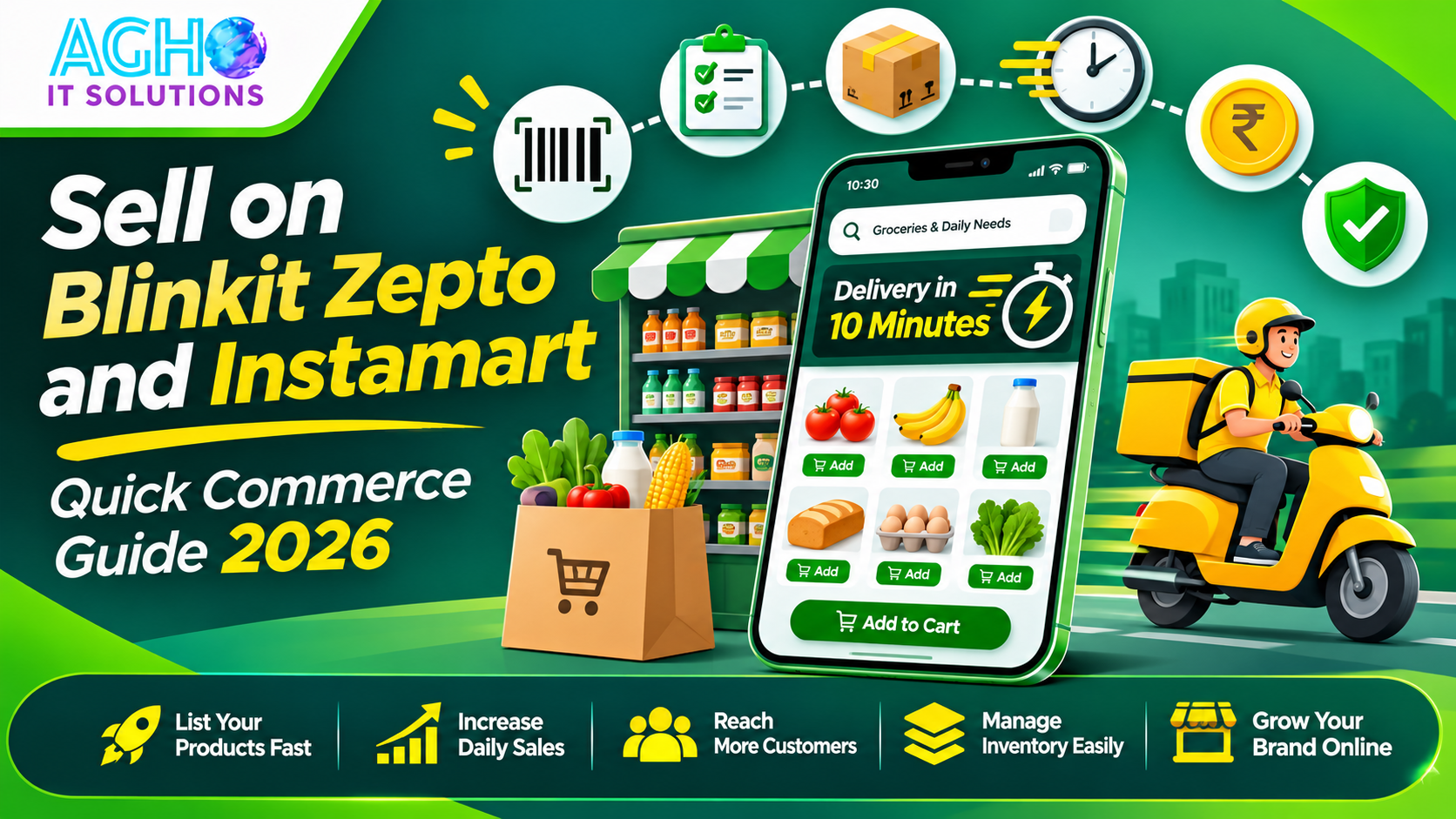
A few years ago, ordering groceries and daily needs online meant waiting for a day or more. Today, millions of people in India open an app and get things in minutes. This is quick commerce, and it has become one of the most talked about sales channels for Indian brands. Many small and mid sized brands now ask the same question. How do we get our products on Blinkit, Zepto and Swiggy Instamart?
The honest answer is that it is possible, but it is not like opening a seller account on a normal marketplace. These platforms choose which brands to list, they need your products ready for fast and exact handling and they expect a steady supply. This guide explains how it works, what you need and how to prepare, so you can apply with confidence.
Platform rules, forms and requirements change often, so always check the official portal of each platform before you apply.
What Is Quick Commerce and How Is It Different
Quick commerce platforms keep stock in small warehouses, often called dark stores, close to customers. When an order arrives, a delivery partner picks it from the nearest dark store and delivers it within minutes. Because of this model:
- Products must be easy to scan, pick and pack quickly.
- Stock must reach the dark stores regularly, without gaps.
- Packaging, labels and barcodes must be clean and correct.
- The choice of products is limited, so each product has to earn its place.
Compare this with Amazon, Flipkart and Meesho. There, you usually hold your own stock or use the platform warehouse and ship to customers across the country. In quick commerce, the platform decides which brands and products to keep in its dark stores.
Which Products Work Best
Quick commerce works best for products that people buy often, in small sizes and on impulse or in a hurry.
- Snacks, sweets, namkeen, packaged foods and beverages
- Spices, ready to cook and pantry items
- Personal care, skincare and beauty products
- Household and cleaning items
- Baby care and wellness products
- Small gifts, stationery and electronics accessories
Bulky, fragile, very expensive or slow selling products are harder to fit into this model.
Who Can Sell
Both established brands and new D2C brands can apply, but platforms look for demand, quality and supply capability. Many platforms want to see that you already have a product people like and a plan to keep supplying it. A brand with a good catalog, clean packaging, a trademark or brand proof and some sales history on other channels has a better chance.
Documents and Readiness Checklist
Requirements differ by platform, category and state, but these are the most common.
- GST registration, PAN and bank account in the name of the business. The business name should be the same across GST, PAN, bank and licences.
- FSSAI licence or registration for food and edible products. FSSAI rules say a food business cannot sell on an e-commerce platform without a licence or registration.
- Other licences for categories such as cosmetics or Ayurvedic products, as required.
- Trademark certificate or application, or brand authorization if you are not the manufacturer.
- EAN barcodes on every product, because each unit is scanned.
- Legal Metrology compliant labels with MRP, net quantity, manufacturer details, dates and customer care information.
- Product catalog with names, sizes, weights, prices and categories.
- Clean pack shots on a white background and a few lifestyle images.
- Supply plan, including how you will deliver stock regularly and handle shelf life.
Some platforms may also ask about GST registration in the states where their dark stores operate. Check this with your accountant before you apply.
Step by Step: How to Get Listed
Step 1 Check If Your Product Fits
Ask yourself whether people buy this often, in small packs, without comparing for long. Check your price against similar products on the apps. If your product is much more expensive or very niche, quick commerce may not be the first channel to try.
Step 2 Fix Your Packaging and Labels
Make sure every pack has a correct barcode and a compliant label, and that it can survive quick handling. Pack sizes that are easy to carry and sell, such as small and medium packs, usually work best.
Step 3 Prepare Your Documents
Collect and check all your documents and make sure the names match everywhere. Incomplete or mismatched documents are a common reason for delay.
Step 4 Apply Through the Official Channel
Each platform has its own entry point, such as a seller or vendor portal or a brand partner form. Use only the official portal of the platform, give correct details about your brand, products, pricing and supply and keep your contact details active.
Step 5 Build a Clean Catalog
Use short and searchable product names that include brand, product, variant and size. Fill every attribute, such as weight, ingredients and shelf life, and upload clear images. Poor catalog quality is a common reason for rejection and low sales.
Step 6 Work Out Pricing and Margins
Quick commerce platforms take their own margins and charges, and you will also bear costs such as logistics to their warehouses, promotions and returns of expired or damaged stock. Read the commercial terms carefully and calculate your profit per unit before you agree.
Step 7 Plan Your Supply
Once approved, you will be asked to supply stock to the platform warehouses, which then supply the dark stores. Plan production, packing, transport and shelf life. Low fill rates or late supply can hurt your visibility.
Step 8 Prepare for Launch
Check your catalog, prices, stock and invoice process before you go live. Decide who in your team will handle orders, quality issues, reconciliation and communication with the platform.
After You Go Live
- Availability: Products that are often out of stock lose rank and trust. Keep stock steady.
- Pack images that read well as small thumbnails: The customer sees a small image on a phone, so your pack should look clear and attractive.
- Ads and visibility: Platforms offer advertising inside their apps. Start small, test and increase the budget on products that sell.
- Reviews and ratings: Respond to customer feedback and fix quality problems fast.
- Payments and reconciliation: Check your invoices, deductions and payments regularly.
- Data: Look at sales by city and dark store, and shape your supply and promotions accordingly.
Quick Commerce vs Normal Marketplaces
- Speed: Quick commerce delivers in minutes, marketplaces in days.
- Selection: Quick commerce keeps a limited range, marketplaces list almost everything.
- Entry: Quick commerce is more selective, marketplaces are more open to new sellers.
- Supply: Quick commerce needs steady bulk supply to dark stores, marketplaces often work with direct shipping or platform warehouses.
- Best for: Quick commerce suits fast moving daily products. Marketplaces suit a wider range of products.
Many brands use both. See our guide on Amazon, Flipkart and Meesho account management and our marketplace management packages.
Local Brands in Lucknow Can Use This Too
Lucknow has many food, sweet, spice, skincare and gift brands with a loyal local following. Quick commerce can open a new set of customers in many cities, if the brand has clean packaging, correct documents and a supply plan. If you sell fashion or handcrafted items, marketplaces and your own store may suit you better. See our guide on how to start a Chikankari business online.
Build Brand Demand Outside the Apps
Quick commerce works best when customers already know your brand.
- Instagram and reels: Show your product, your story and how people use it. See our guide on Instagram marketing for small business and our social media management service.
- Meta ads and Google ads: Create awareness and drive searches for your brand. See our Meta ads management and Google ads management services and our guide on Google Ads AI Max.
- Your own website: A clear site with your products and story builds trust. See our e-commerce website development service and our guide on how to create a website for your business.
- Logo and packaging design: A clean pack stands out on a small phone screen. See our logo design and social media graphics services.
- WhatsApp: Keep your customers close with updates and offers, only with their permission. See our guide on the WhatsApp Business app and the DPDP Act checklist for customer data.
- Sale seasons: Plan offers for festivals and shopping events. See our guide on Black Friday preparation for online sellers.
Common Mistakes to Avoid
- Applying with incomplete or mismatched documents.
- Missing barcodes or non compliant labels.
- Poor product images that look unclear on a small screen.
- Not calculating margins after all platform charges.
- Promising supply you cannot deliver.
- Ignoring shelf life requirements.
- Depending on one platform for all sales.
- Using unofficial agents who promise guaranteed listing for a fee.
- Not tracking sales and payments.
Be careful with anyone who promises guaranteed approval on a quick commerce platform in exchange for a fee. Apply through the official channels.
A Simple 30 Day Preparation Plan
- Week 1: Check your product fit, margins and documents. Complete any missing licences and registrations.
- Week 2: Fix barcodes, labels and packaging. Shoot clean product images.
- Week 3: Build your catalog sheet and brand story. Prepare your supply plan.
- Week 4: Apply through official portals, and meanwhile build demand with social media and your own website.
Get Marketplace and Quick Commerce Support from Agho IT Solutions
At Agho IT Solutions in Lucknow, we provide Blinkit account management along with Amazon, Flipkart, Meesho and Myntra account management, catalog support and brand marketing. Our team can guide you on preparation, catalog and day to day account handling. We cannot guarantee approval, because each platform decides which brands to list.
Call us on +91-9194046587 or visit us at L-III/77, Sector-D, Aliganj, Lucknow, Uttar Pradesh 226024. You can also contact us online for a free consultation.
Frequently Asked Questions
Can small brands sell on Blinkit, Zepto and Instamart?
Yes, small and new brands can apply through the official channels, but platforms look for demand, quality, correct documents and a reliable supply plan.
Is GST mandatory for quick commerce sellers?
In general, platforms ask for GST registration along with PAN and bank details. Requirements can vary, so check the platform rules and confirm with an accountant.
Do I need FSSAI to sell food products?
Yes. Food businesses need the proper FSSAI licence or registration to sell on an e-commerce platform.
Do I need a trademark?
Platforms usually ask for brand ownership or authorization proof. A registered trademark or a trademark application often helps, especially against copycat sellers.
How long does approval take?
It varies by platform, category and how complete your documents are. Reports mention anything from a couple of weeks to a couple of months, so plan ahead.
Can I sell on quick commerce and Amazon at the same time?
Yes. Many brands sell on quick commerce, marketplaces and their own website together. Just keep prices, stock and policies organized across channels.
Frequently Asked Questions
Quick answers to common questions about this article and our technology solutions.
01
Digital Marketing & Business
Are there any limits on Support?
With valid entitlement, there are no limits on the number of questions, who asks the question, or the topic (as long as it is reasonably related to the product). There is a 16-hour limit on the effort Arm spends on an individual case before requiring a management review of the case.
02
Digital Marketing & Business
What is the recruitment and interview process at AGHO IT Solutions?
Our interview process typically includes: 1) Initial profile screening and shortlisting by HR, 2) Technical interview / practical assignment, 3) Cultural and leadership discussion with department heads, and 4) Final offer letter rollout.
03
Digital Marketing & Business
Do you serve clients outside Lucknow?
Yes, we serve clients across Uttar Pradesh including Barabanki, Hardoi, Unnao, Sitapur and Raebareli and many more . We also serve international clients in UAE, US and Canada.
04
Digital Marketing & Business
Can I apply if my skills match multiple positions?
Yes! You can apply for a specific role or choose "General Application" from the positions dropdown. Our talent acquisition team will evaluate your resume against all active and upcoming openings.
Turn Your Vision Into a Scalable Software Solution
Whether you need Hospital Management Software, Cloud ERP, High-Converting Website, or Mobile App — get free technical architecture consultation with our engineering team.