Table of Contents
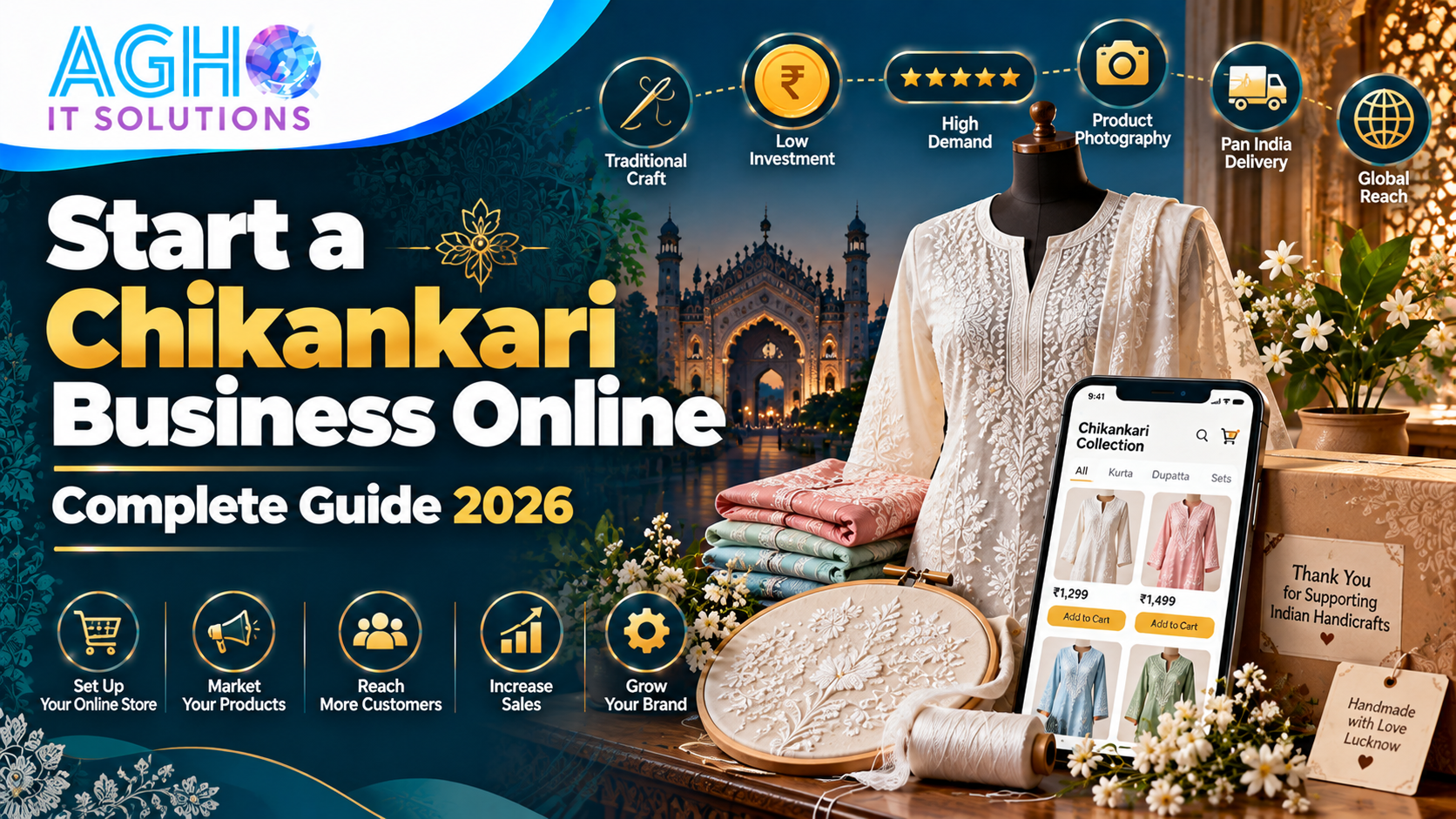
Say Lucknow, and many people think of Chikankari. This delicate hand embroidery on soft fabrics has been loved for generations, and today it is a favourite for festive wear, weddings, summer outfits and gifts across India and abroad. Many people ask the same question. Can I start a Chikankari business online, and how?
The answer is yes, but the business does not run on the name Lucknow alone. Customers cannot touch the fabric or inspect the stitches through a screen, so trust, honest quality and good presentation decide who succeeds. This guide explains how to start step by step.
Why Chikankari Sells Well Online
- A strong identity: Chikankari is easy to recognize and has a story that people connect with.
- Wide use: Kurtas, kurtis, suits, sarees, dupattas, shirts and gifts all use it.
- Seasonal demand: Light cotton and mulmul pieces are popular in warm weather, and festive and wedding seasons bring more orders for heavier and fancier pieces.
- Gifting: People buy Chikankari as a gift for relatives and friends, including those living far from Lucknow.
- Customers outside Lucknow: Many buyers cannot visit Lucknow, so they depend on online sellers they trust.
What Is Chikankari
Chikankari is a traditional hand embroidery from Lucknow, done with fine thread on light fabrics such as cotton, mulmul, georgette, chiffon, chanderi and silk blends. Different stitches create the delicate look, and well known ones include tepchi, bakhiya, murri, jali and hool. Lucknow Chikan is also a registered Geographical Indication craft, so it matters to describe the origin of your product honestly.
Choose Your Business Model
- Own brand with artisans: You design the products, get them made by artisans or workshops and sell them under your brand name. Highest control and brand value, but needs more planning.
- Boutique or reseller: You buy ready pieces from makers or wholesalers and sell them online. Easier to start with lower effort in production.
- Wholesale or private label: You supply boutiques and online brands, or make products under their brand name.
- Marketplace seller: You list products on platforms such as Amazon, Flipkart, Meesho and others.
- Made to order: Customers choose a design, size and colour and you get the piece made for them. Good for bridal and special pieces.
Choose one model to begin. You can add others later.
Step 1 Decide Your Niche
Do not try to sell everything. Choose a clear niche that makes your brand easy to remember. For example:
- Everyday cotton Chikankari kurtas for working women
- Bridal and festive Chikankari wear
- Chikankari for men
- Chikankari sarees and dupattas
- Kidswear
- Plus size Chikankari
- Gift sets and accessories
A clear niche also helps you choose the right photos, prices and marketing.
Step 2 Source the Right Products
Lucknow has a large network of artisans, workshops and wholesalers, including well known Chikan markets such as Chowk and others across the city. Build relations with a few reliable makers instead of many random sellers.
- Visit the workshops and meet the artisans if you can.
- Ask for samples before placing a large order.
- Agree on rates, delivery time, quality standards and the policy for defects in writing.
- Start with a small range and scale as you sell.
- Keep records of every supplier and order.
Step 3 Understand Quality and Be Honest About It
Quality is the heart of your reputation. Check these points on every piece:
- Fabric: Soft, even and suitable for the season.
- Embroidery: Neat, with a consistent stitch and no loose threads.
- Finishing: Clean seams, neat edges and proper stitching.
- Colour fastness and shrinkage: Ask about washing, and test a sample if possible.
- Sizing: Measure the actual garment and make a clear size chart.
Be honest about how the product is made. Hand embroidered, machine embroidered and digitally embroidered pieces are different products with different prices, and customers deserve to know which is which. Hand work often has small natural variations, which you can explain as part of its charm. Never use the word authentic or handmade for a product that is not. Honest labelling builds repeat customers, and misleading claims damage your name very quickly.
Step 4 Set the Right Price
List all your costs, such as product cost, packaging, delivery, returns, marketplace and payment fees, photography, marketing and your time. Then add your profit. Price according to the quality, the amount of embroidery work and your target customer. Do not copy the lowest price in the market, because a very low price often means low quality or low profit. Explain what the customer is paying for.
Step 5 Brand and Presentation
A beautiful craft needs a beautiful identity. Choose a short and memorable name, a clean logo and a consistent colour palette that suits the soft and elegant feel of Chikankari. Design simple price tags, packaging and a thank you card. See our guide on logo design in India and our logo design and graphic designing packages.
Step 6 Photography That Sells
Customers cannot touch the fabric, so photos must do the work.
- Use natural light and a clean background.
- Show the full outfit, close ups of the embroidery, the back, the neckline and the sleeves.
- Show the product on a model and also laid flat, so the fall and colour are clear.
- Keep colours as close to real as possible, to avoid disappointment and returns.
- Add a short video that shows how the fabric moves.
- Mention the model height and the size she wears.
- Show the size chart and the garment measurements clearly.
Step 7 Write Clear Product Descriptions
Include the fabric, the type of embroidery, colour, available sizes, measurements, care instructions, what is included in the set, delivery time and return policy. Use simple language. Tell a short story about the craft, the artisans and the design, because stories help people feel connected.
Step 8 Choose Where You Will Sell
- Instagram and WhatsApp: A very natural fit for Chikankari. Customers browse your photos, ask questions in chat and order directly. Great for a first start.
- Your own website: Gives you control of your brand, customer data and prices, and builds trust. See our e-commerce website development service, our guide on e-commerce website features and the website development cost in Lucknow.
- Marketplaces: Reach many buyers quickly, but you follow their rules, pay their fees and compete with many sellers. We help with Amazon account management, Flipkart account management and Meesho account management, and you can read our guide on Amazon, Flipkart and Meesho account management.
- Export platforms: If you plan to reach Indians and fashion lovers abroad, platforms such as Etsy and your own international website can open new markets, but delivery, duties and returns need extra planning.
Most successful sellers combine two or three channels over time.
Step 9 Set Up Payments, Delivery and Returns
- Offer UPI, cards and cash on delivery if it suits your products.
- Choose reliable courier partners and compare charges and delivery time.
- Pack garments carefully in clean, protective packaging, and add wash care instructions, since Chikankari needs gentle handling.
- Write a clear return and exchange policy. Sizing and colour differences are the main reasons for returns, so good photos and size charts reduce them.
Step 10 Legal and Money Basics
The requirements depend on your business size and where you sell. In general, think about these points:
- A business name and structure, such as a sole proprietorship, partnership or company.
- A PAN and a separate business bank account.
- GST registration. Marketplaces generally ask for GST details when you register, and other sellers may need it depending on turnover and location.
- Udyam registration for small businesses, where it applies.
- Records of purchases, sales and expenses.
- Honest product labelling, including the origin and type of embroidery.
Rules and limits change, so confirm the latest requirements with a chartered accountant and the official portals.
Step 11 Get Your First Customers
- Start with your circle: Friends, family and local contacts can give you your first orders and honest feedback.
- Instagram reels: Show embroidery close ups, the making process, artisan stories, styling ideas and festive looks. Our social media management team can handle this.
- WhatsApp catalog: Share your collection with interested customers and answer questions quickly. Learn more in our guide on WhatsApp commerce in India.
- Google search: Create product and category pages that explain what you sell, so people searching for Chikankari kurta online can find you. See our guide on SEO for small business in India.
- Google Business Profile: If you have a shop or studio in Lucknow, create a profile. Read our guide on Google Business Profile optimization for Lucknow businesses.
- Ads: Try small Instagram and Facebook ads with a clear festive or seasonal offer, after your photos and prices are ready. Learn more in our guide on Meta ads versus Google ads.
- Reviews and photos from customers: Ask happy customers to share a photo and a short review. Real customers are the best advertisement.
- Repeat customers: Keep a list of buyers with permission and message them about new collections and festive offers using bulk WhatsApp marketing.
Plan Your Year Around the Seasons
- Summer: Light cotton and mulmul pieces for everyday wear.
- Festive season: Colours and styles for Diwali and other festivals. See our guide on Diwali marketing ideas.
- Wedding season: Bridal, festive and gifting pieces, and outfits for family members. Our guide on wedding season marketing ideas shows how to prepare.
- Gifting occasions: Hampers, dupattas and ready sets for birthdays and anniversaries.
Start planning each season at least a month or two in advance, so your stock, photos and marketing are ready.
Customer Service That Builds a Brand
- Reply to messages quickly and politely.
- Send photos or a short video of the exact piece before shipping, if the customer wants.
- Share tracking details and delivery updates.
- Handle problems fairly and quickly.
- Add a thank you note and care instructions in every parcel.
Good service turns first time buyers into loyal customers who recommend you to others.
Simple 30 Day Plan to Start
- Week 1: Decide your niche and business model, visit suppliers and finalize your first small range.
- Week 2: Complete your registrations and bank account, choose your name and logo, and plan your photos and pricing.
- Week 3: Shoot your photos and video, write your descriptions, set up Instagram, WhatsApp Business and your first selling channel.
- Week 4: Launch to your contacts, post reels, ask for feedback and reviews and fix the issues you find.
Common Mistakes to Avoid
- Selling everything instead of choosing a niche.
- Not checking quality and sizing before listing.
- Calling machine work handmade or hiding how a product is made.
- Using dark or poorly lit photos with wrong colours.
- Underpricing without counting returns, delivery and fees.
- Ignoring packaging and care instructions.
- Depending on one channel only.
- Not replying to customers quickly.
- Skipping basic registrations and records.
- Buying too much stock before testing demand.
Grow When You Are Ready
When your orders increase, you can add a larger range, hire help, build your own website, join more marketplaces and work with boutiques. Tools such as e-commerce management software and a CRM software help you manage orders, stock and customers. If you are still exploring ideas, read our guide on how to start an online business in India and our list of business ideas in Lucknow.
Get Help Building Your Chikankari Brand Online
At Agho IT Solutions in Lucknow, we help fashion and craft businesses with e-commerce websites, marketplace management, logo and brand design, social media management, SEO and complete digital marketing services, so that your craft reaches customers across India.
Call us on +91-9194046587 or visit us at L-III/77, Sector-D, Aliganj, Lucknow, Uttar Pradesh 226024. You can also contact us online for a free consultation.
Frequently Asked Questions
Quick answers to common questions about this article and our technology solutions.
01
Digital Marketing & Business
Can I start a Chikankari business online without a shop?
Yes. Many sellers start with Instagram and WhatsApp and work with artisans or wholesalers in Lucknow, with no shop at all. As you grow, you can add a website and marketplaces.
02
Digital Marketing & Business
Where can I source Chikankari in Lucknow?
You can find artisans, workshops and wholesalers across Lucknow. Visit them in person if you can, ask for samples, compare quality and agree on terms in writing before placing a large order.
03
Digital Marketing & Business
How do I know if Chikankari is real hand embroidery?
Hand embroidery usually shows small natural variations and a fine finish on the back. Machine and digital embroidery look very even. Ask your supplier clearly how each piece is made, and describe it honestly to your customers.
04
Digital Marketing & Business
Do I need GST to sell Chikankari online?
Marketplaces generally ask for GST details when you register. Other sellers may need it depending on turnover and location. Rules change, so confirm with a chartered accountant.
05
Digital Marketing & Business
Which platform is best for selling Chikankari?
Instagram and WhatsApp are a natural start, a website gives you brand control and marketplaces give reach. Most sellers combine two or three over time.
06
Digital Marketing & Business
How do I reduce returns?
Use clear photos with true colours, an accurate size chart with garment measurements, a clear description and good packaging, and reply to customer questions before they order.
07
Digital Marketing & Business
Can I sell Chikankari outside India?
Yes, through your own website or international platforms. Plan the delivery, duties, returns and payment options carefully before you start.
Turn Your Vision Into a Scalable Software Solution
Whether you need Hospital Management Software, Cloud ERP, High-Converting Website, or Mobile App — get free technical architecture consultation with our engineering team.